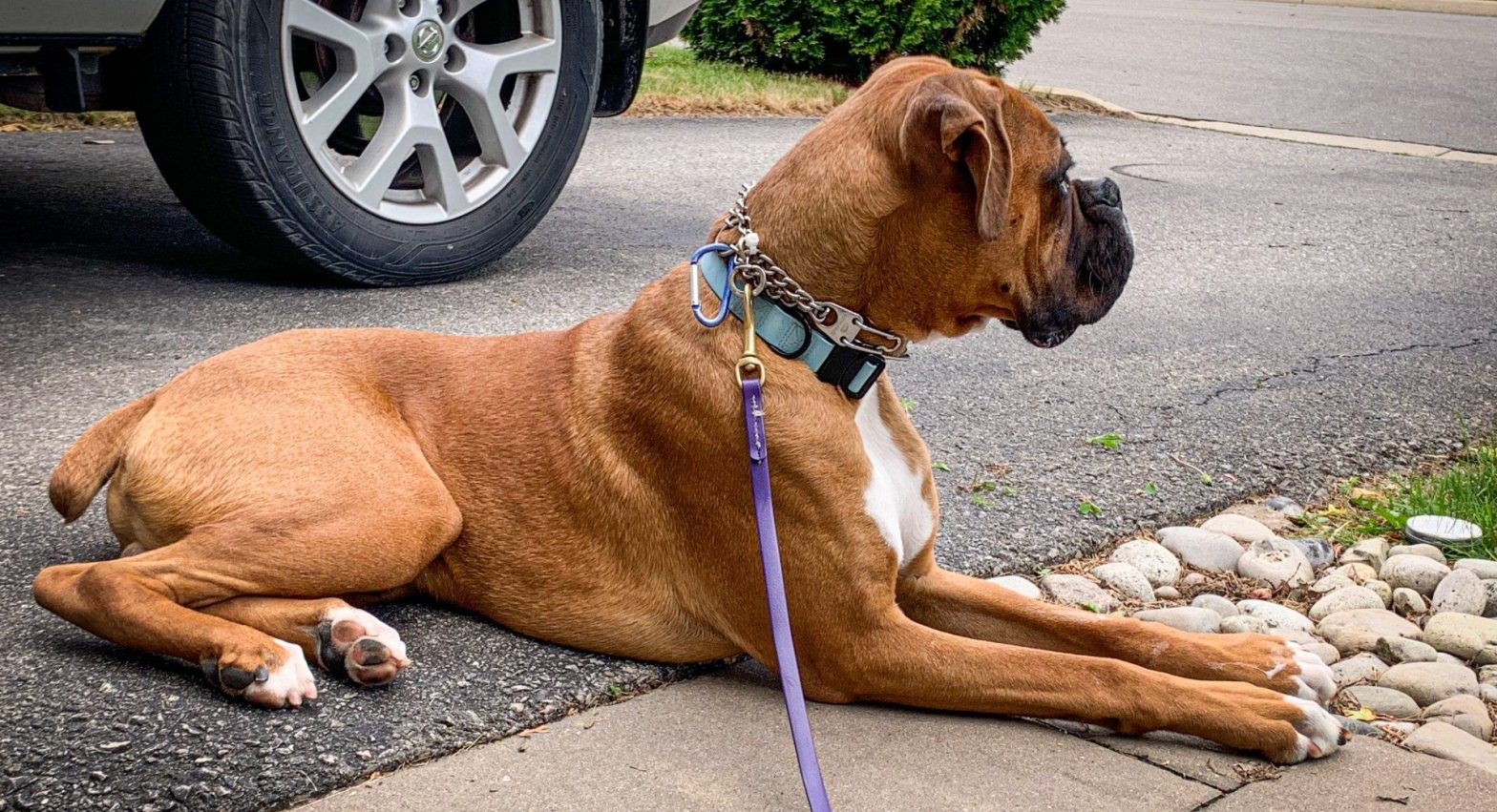
Most dogs come preprogrammed with some sort of anxiety, it’s nature. It kept them alive for thousands of years. Without some anxiety, species would die out rather quickly, and it’s common to see some anxieties in puppies, especially when they are placed into new homes. However, some dogs come with an over abundance of anxiety and fears, which makes them over reactive with their fears. This can mean flight, fight or freeze. You’ll hear these dogs called “nervy” in the sport world. Always ready for something to come at them at any moment, taking long to recover from experiences, long to acclimate to surroundings, having a hard time building confidence, becoming defensive, and some of these dogs end up as dangerous biters.
Sometimes fear is experienced/trauma based, sometimes it is socialization based or lack-there-of, but often times there is a genetic component at play. For those who don’t believe that fear (and other behaviours) can be passed down through genetics I implore you to do some research into the “Fearful Pointer Study” https://link.springer.com/chapter/10.1007/978-1-4612-3524-8_5 as it can shed some light on heritable behaviour and responses.
Fearful dogs can be some of the most difficult dogs to work with, especially if we are dealing with a large genetic component. You can most certainly help them gain confidence, acclimate to their surrounds, socialize better, and become a mentally healthier dog over all, but this takes a lot of time and effort, and they may never become the super confident, social butterfly dog that you are looking for. Working with these dogs requires positive or neutral interaction/observation of the fear object be it people, other dogs, novel objects, new environments etc. It requires repetition over and over and over again in a safe and controlled manner of the things that stimulate the fear patterns. It requires a calm and confident handler and someone who doesn’t project frustration or anxiety down the leash. Sometimes it requires pressure, but not too much pressure, a balancing act of sorts between positive motivation and pressure work.
There are, however, situations that arise where we have to make the dog accept things or it will take them months to get over things. Sometimes people don’t like to hear this part, but pressure can make a massive difference when dealing with environmental or situational fears. I used to run my Jack Russell Terrier in agility. She loved that sport, always enthusiastic and ready to perform at the drop of a hat, unless a ball was visible somewhere. One day at class she had a fall off of the teeter. She scared herself badly. This was a rock solid dog, with confidence out the butt, but she because quite fearful of getting back on this piece of equipment. I tried for days with just food, toys and positive work to get her to understand that it was ok to get back on and that I’d support her. This was a massively food and toy driven dog, but she wasn’t getting back on for any type of cookie or ball. So I did what most parents did in the 80’s when you fell off of your bike or horse. Get back on and try again, if you don’t right now, you never will. I scooped that dog up, plopped her on the teeter, used some leash pressure, supported her body, gentled the landing, and rewarded heavily at the end. It took maybe all of two or three times before she went, oh, it’s really no big deal, and was back running it again with never another issue. If I relied solely on positive only techniques, waiting on the dog to feel perfectly comfortable, it would have taken a very long time to remind her that the teeter was ok. I didn’t have that kind of time. So with a bit of “force” and an attitude of “too bad, you have to do it” we were back up and running in a matter of a half hour.
The dog above wasn’t a genetically fearful dog however, so the addition of pressure and physical help wasn’t a traumatic experience. Some dogs will absolutely shut down at this approach if they are too far gone, and then the process is much longer and the road rockier. I have included below an extreme close up, windy, with gum in my mouth discussion on anxious/nervous dogs and the use of pressure with reward and the over looking of precision for comfort and how sometimes “you have to” works to our advantage. I hope that it gives you some insight if you share your home with one and are trying to work on them.

